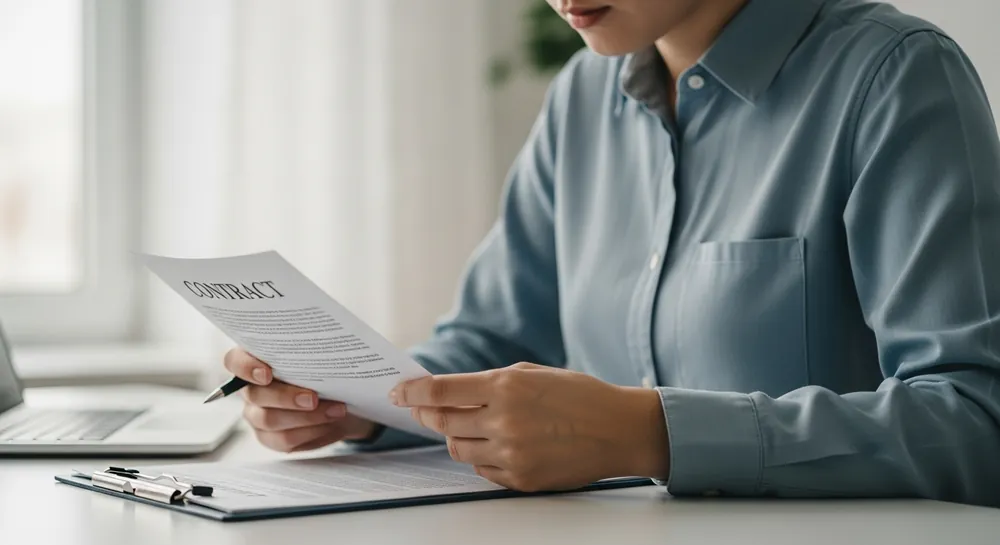
 Independence
The hidden cost of 'free' advice
If you're not paying for the advice, it's worth looking closely at who is - and why.
 Mei Lin Tan31 March 2026 · 5 min read
Before you sign anything significant, an independent read pays for itself many times over.
Here's a pattern we see constantly: someone smart, careful and busy is handed a polished proposal. It looks thorough. The person presenting it seems credible. The pressure to proceed is gentle but real. And almost nobody reads it the way they'd read it if they had a free week.
That gap - between how carefully you'd assess something and how carefully you actually can - is where expensive mistakes live.
Most proposals are written by someone who benefits if you say yes. That doesn't make them dishonest. It makes them not neutral. A second opinion's entire value is that it has no stake in your answer.
Usually not a smoking gun. More often: a clause that quietly shifts risk onto you, an assumption that doesn't hold, a comparison that was never made, or a question you'd want answered before committing. Small things, with large consequences.
A review costs a fraction of most decisions worth reviewing. If it changes nothing, you proceed with confidence. If it changes one term, it can pay for itself many times over. That asymmetry is why we think second opinions are the cheapest insurance most people never buy.
Chief Executive Officer
Founded Clear Sky Consulting in 2018 after twelve years advising private clients inside two of Australia's largest institutions. Sets the firm's standard for independence.
Independence
If you're not paying for the advice, it's worth looking closely at who is - and why.
Mei Lin Tan31 March 2026 · 5 min read Decision-making
When a choice feels impossibly tangled, these three questions reliably reveal what actually matters.
Mei Lin Tan2 June 2026 · 6 min read Wellbeing
Big decisions made on a tired, overloaded mind tend to be bad ones. A few simple habits help.
 Sophie Lindgren28 April 2026 · 4 min read